

1923 Gibson F5 (Lloyd Loar, January 5, 1923)
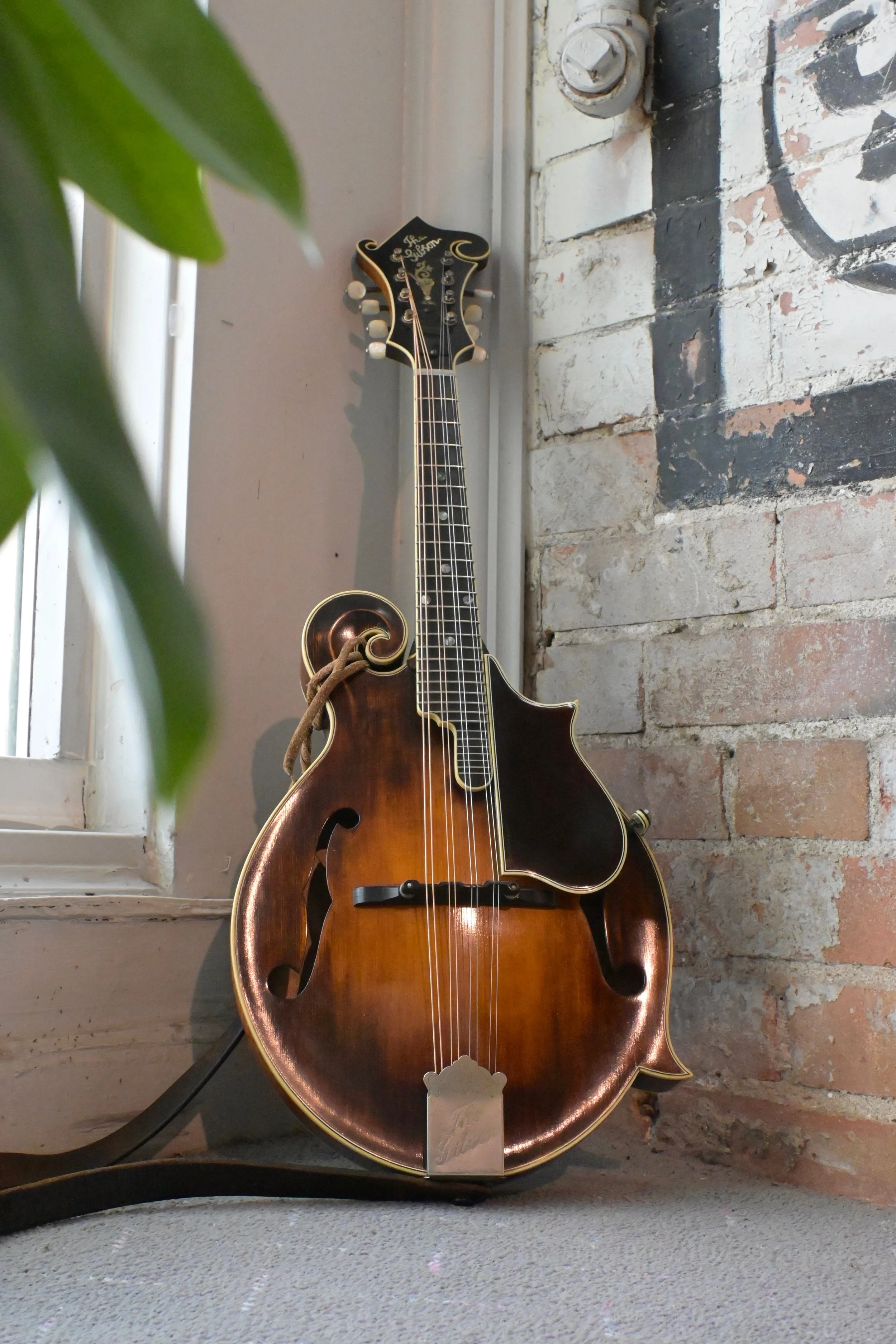
1923 Gibson F5 (Lloyd Loar, January 5, 1923)
It cannot be overstated the effect that the Gibson F5 mandolin has had on popular American culture, let alone bluegrass, folk, rock n’ roll, and more. Shortly after Bill Monroe bought his July 9, 1923 Lloyd Loar signed Gibson F5, his music, named after the band of the same name, took the world by storm, influencing music from folk, Americana, gospel and more, all the way to being one of the early inspirations for Rock N’ Roll.
Signed by acoustic engineer and shop foreman Lloyd Loar on January 5th, 1923, one of five mandolins approved and signed that day, this beautiful F5 has had a storied past that now has a new opportunity to be continued by its next discerning player.
This mandolin is a definite winner, with a nice, woody chop, and bright, chimey single notes, and though it’s sat for at least a few years, it’s quickly coming back to life and wowing us while it does.
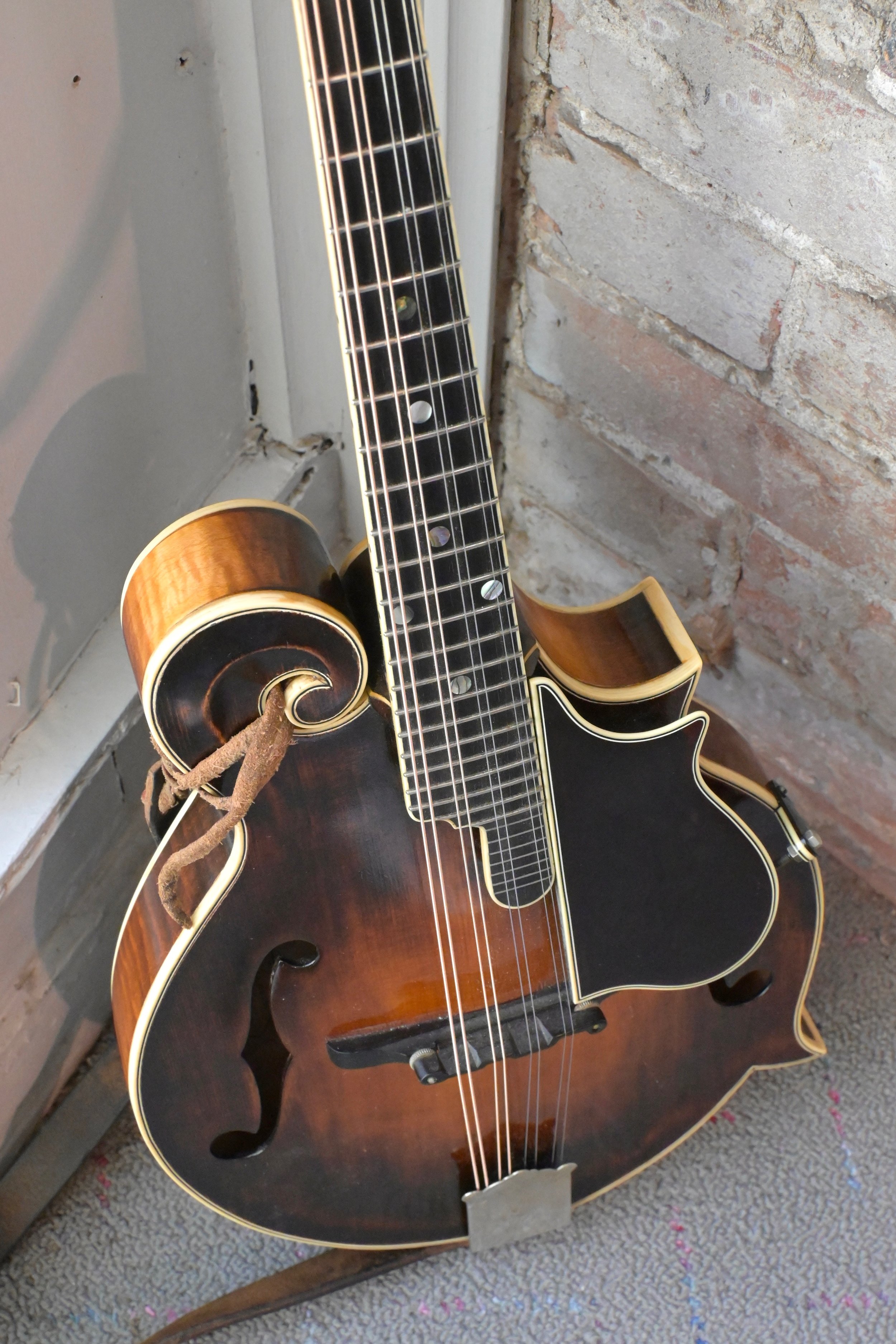
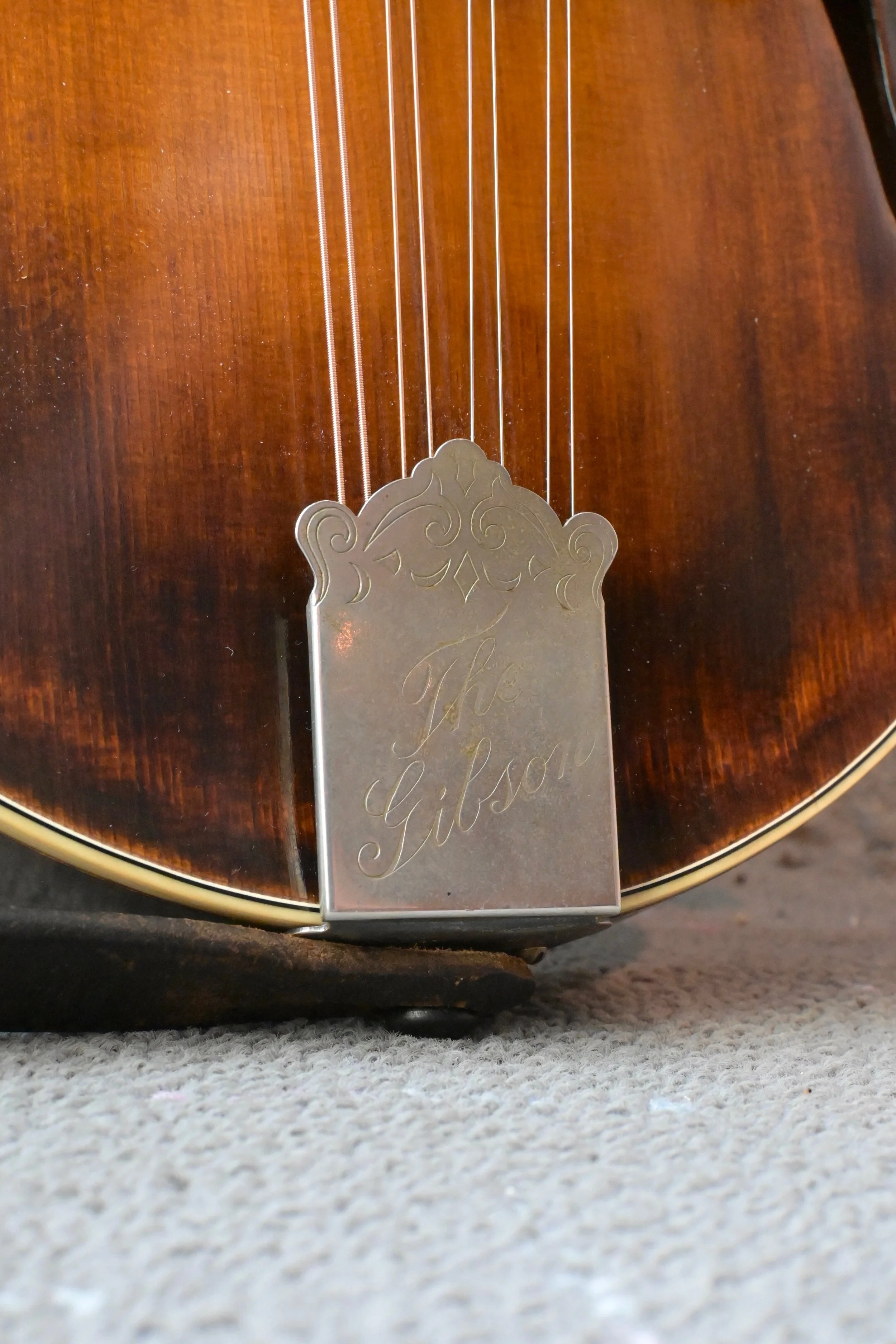
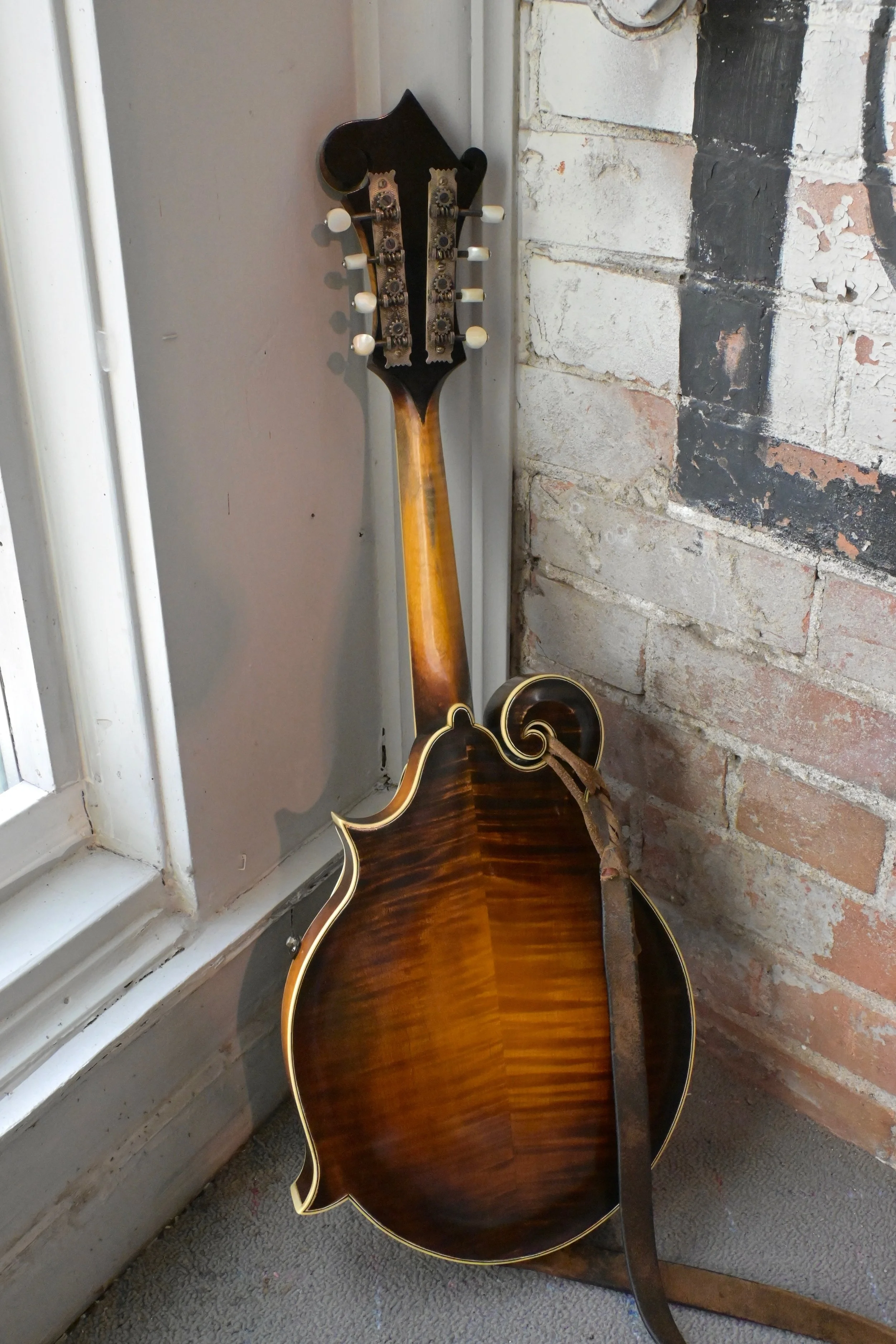
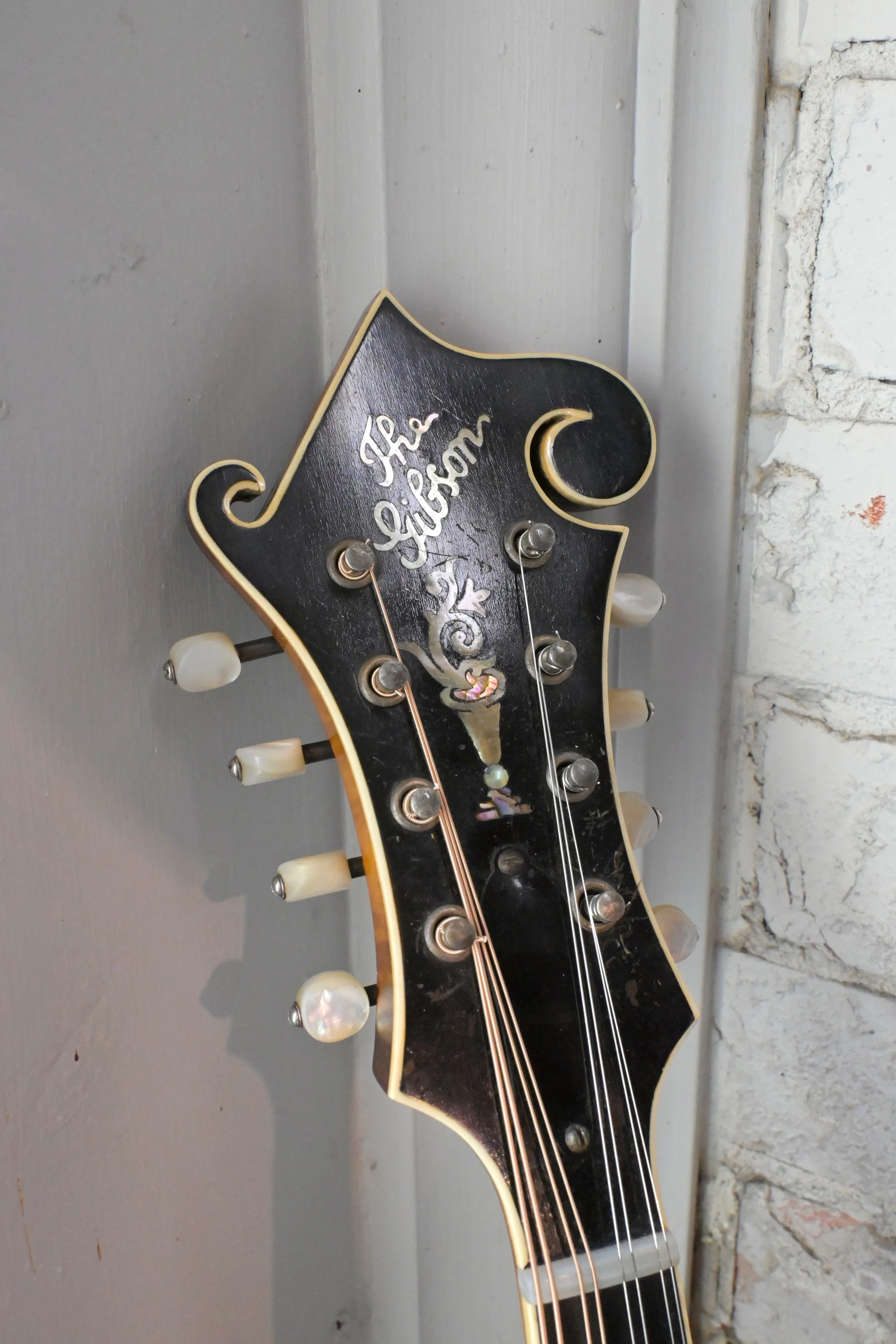
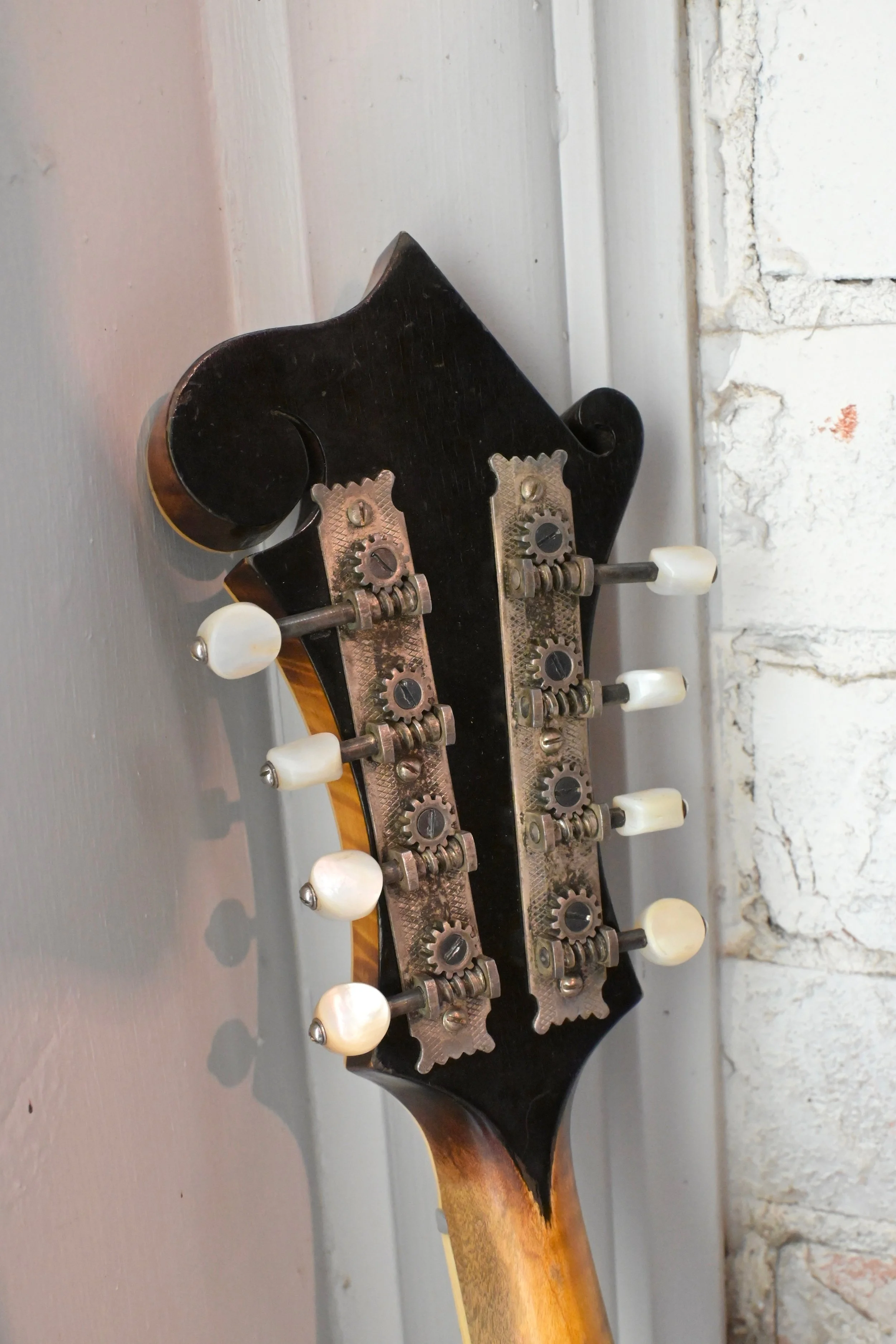
Made before all the details of the F5 had been ironed out, this fairly early production F5 still features the F4 style Handel tuners, (though they lack the well known inlaid tuning buttons, which went away a year or two previously), as well as the early, more outward facing tuner angle and 15/16ths spacing, which was quickly replaced by the more familiar narrow end tuners. Also included in this early “working things out” stage is a different, single piece fretboard binding than later examples, being just one piece of ivoroid instead of the white/black/white stripe sandwich that appears two months later. It’s possible as well that the F4 style tailpiece on this instrument is original, given its early serial, but more likely is a contemporary replacement.
The neck on this mandolin is a slightly larger feel than other F5’s of its contemporary, still with a nut width just a breath over 1 1/16, but with a slightly larger, more F4 like neck profile. It’s amazingly comfortable, and surprisingly modern feeling, having an almost Collings like feel to it.
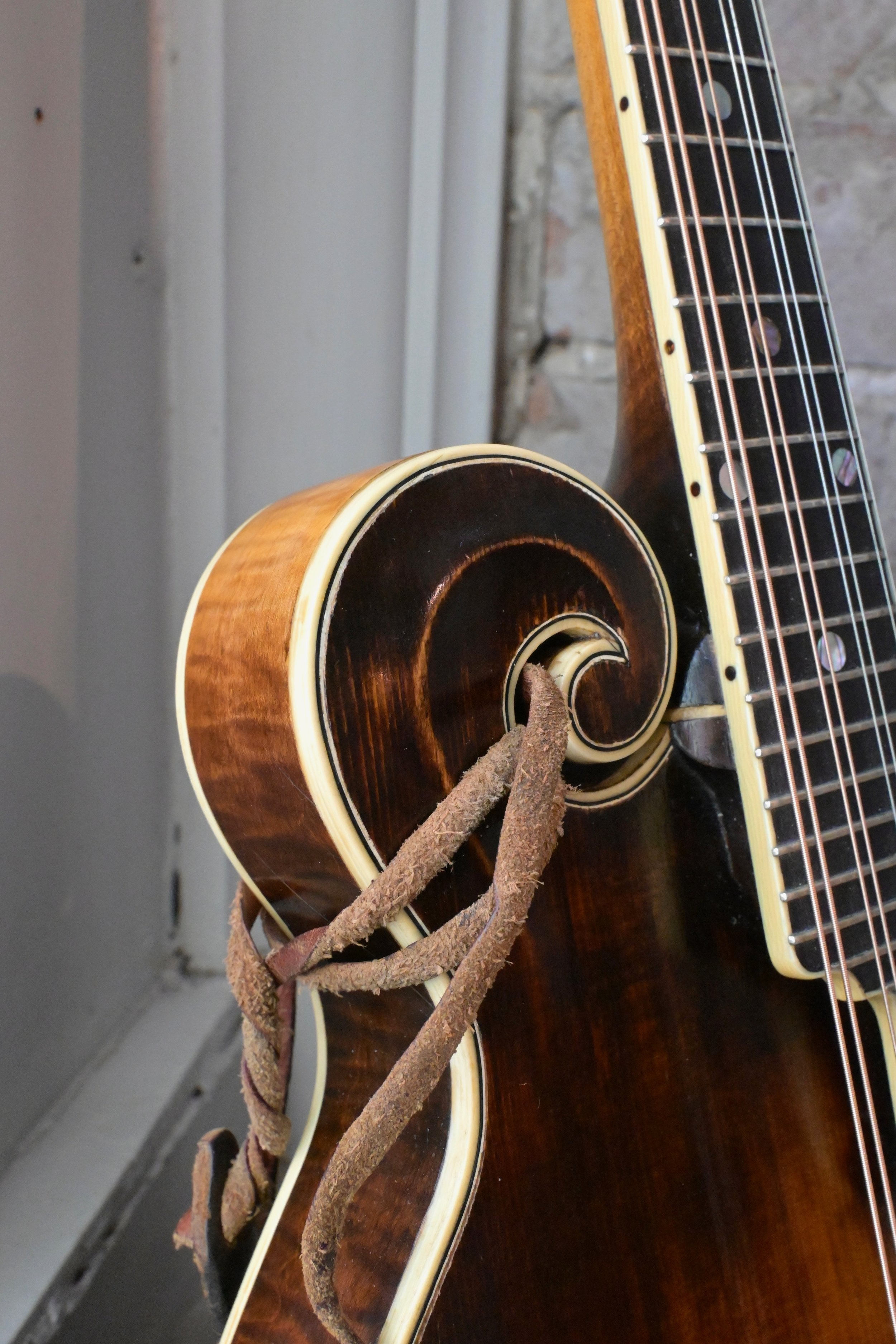
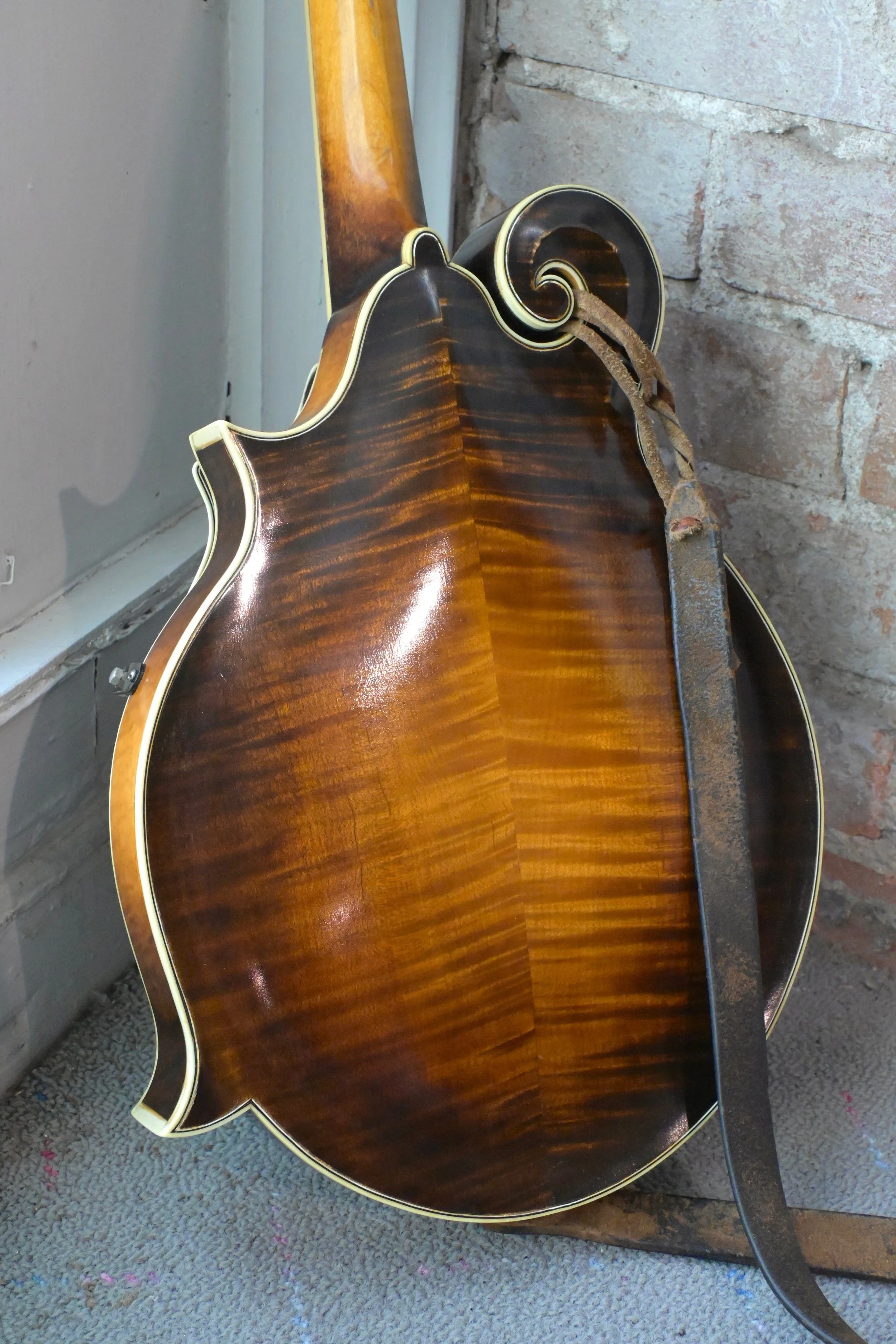
This mandolin, with its beautiful spruce top and amazing flamed maple back and sides, has seen a front and back refinish in its long life (the sides, neck and headstock retain their original finish), most likely before 1944, and, done by a violin maker, since it’s also a varnish finish and the application is similar to many violin finish techniques. Either way, it’s an old refinish, and darned gorgeous to boot.
The ebony fretboard has been replaced with a radiused, scooped fretboard as well, likely by Lynn Dudenbostel, mandolin maker of Chris Thile fame and respected figure in the mandolin community, who has made several fretboards for Loars over the years. The original, however, still sits in the original case, wrapped and ready to go! The bridge foot is original, the saddle a replacement made to match the radius, but the original saddle is also safe in the case should you want to change it back.
All in all, it’s amazing that even after 103 years, and at least 82 of them being with the newer varnish, this mandolin has survived in the state it’s in today, with zero structural issues, and an impeccably good setup.
This one is for the history books. Comes with authentication papers from Elderly Music.
Comes with the original rectangular black, green lined hard case from Gibson.
Local pickup only.