
1953 Martin D-18 (Refinished)
1953 Martin D-18 (Refinished)
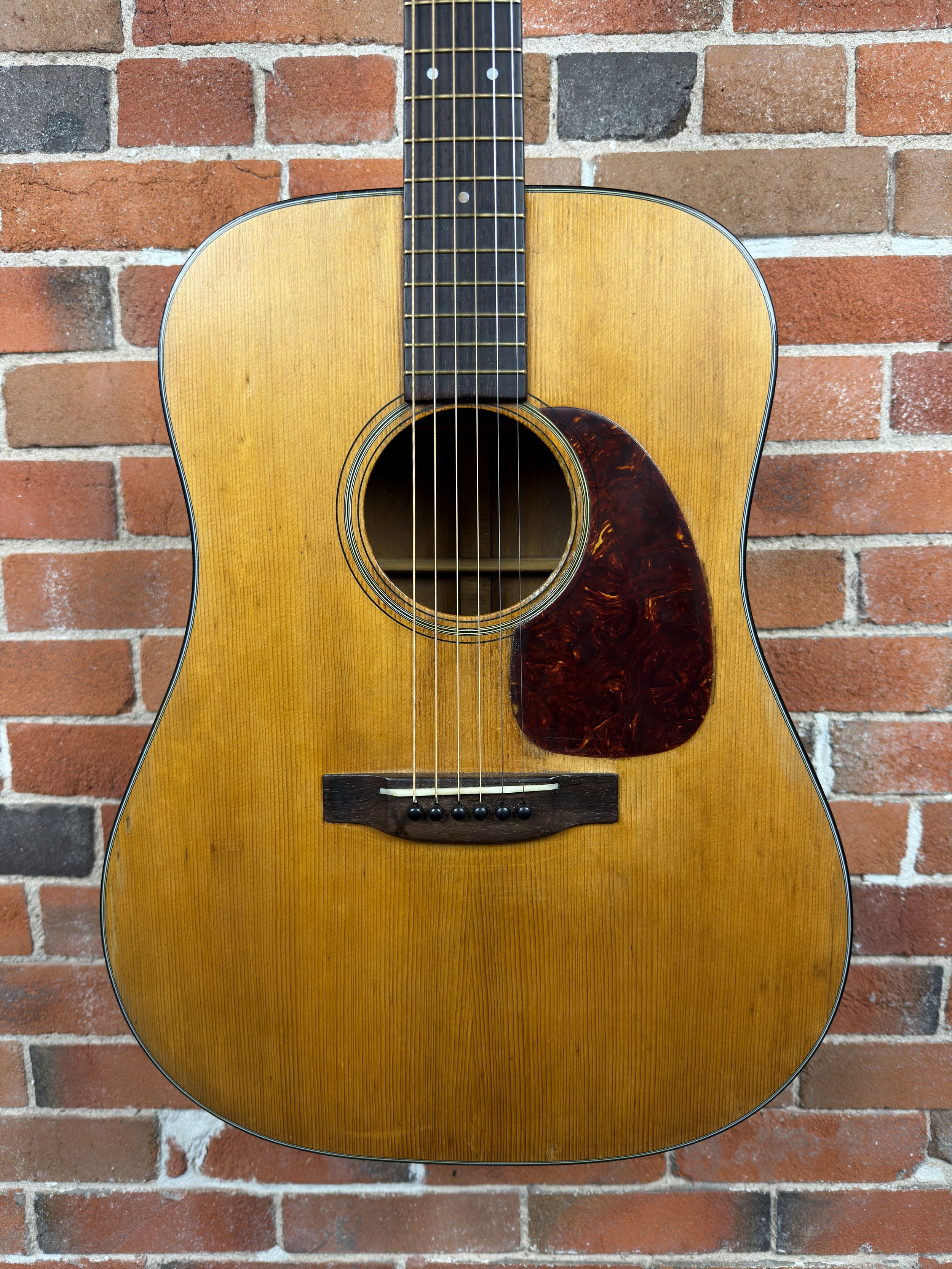
The Martin D-18 is, for many, the ultimate dreadnought, with a warmer, more “woody” sound than its rosewood counterpart, lending itself to country, bluegrass, rock, and more.
By the mid 1950’s, Martin was well established in the world of popular music, thanks to Rock ‘n Roll acts like Elvis, as well as Bluegrass legends like Flatt and Scruggs (Earl often picked a D-18 on stage) and Bill Monroe’s constantly evolving roster of lead guitar players.
1953, though a tad bit before Elvis’ time, still saw significant production and sales on Martin’s part, having steadily increased in the post-war period. In 1953 specifically, guitars are famed for their “mystery tops”, during their transition away from Adirondack, or “red” spruce by the late 40’s. Advertised as Sitka, the newer spruce choice for Martin, these 1953 guitars (approximately 30% of them) were produced with a wood that most definitely was not Sitka. The identity of said “mystery” wood is still debated to this day, whether Engelmann, Adirondack, German spruce or more.
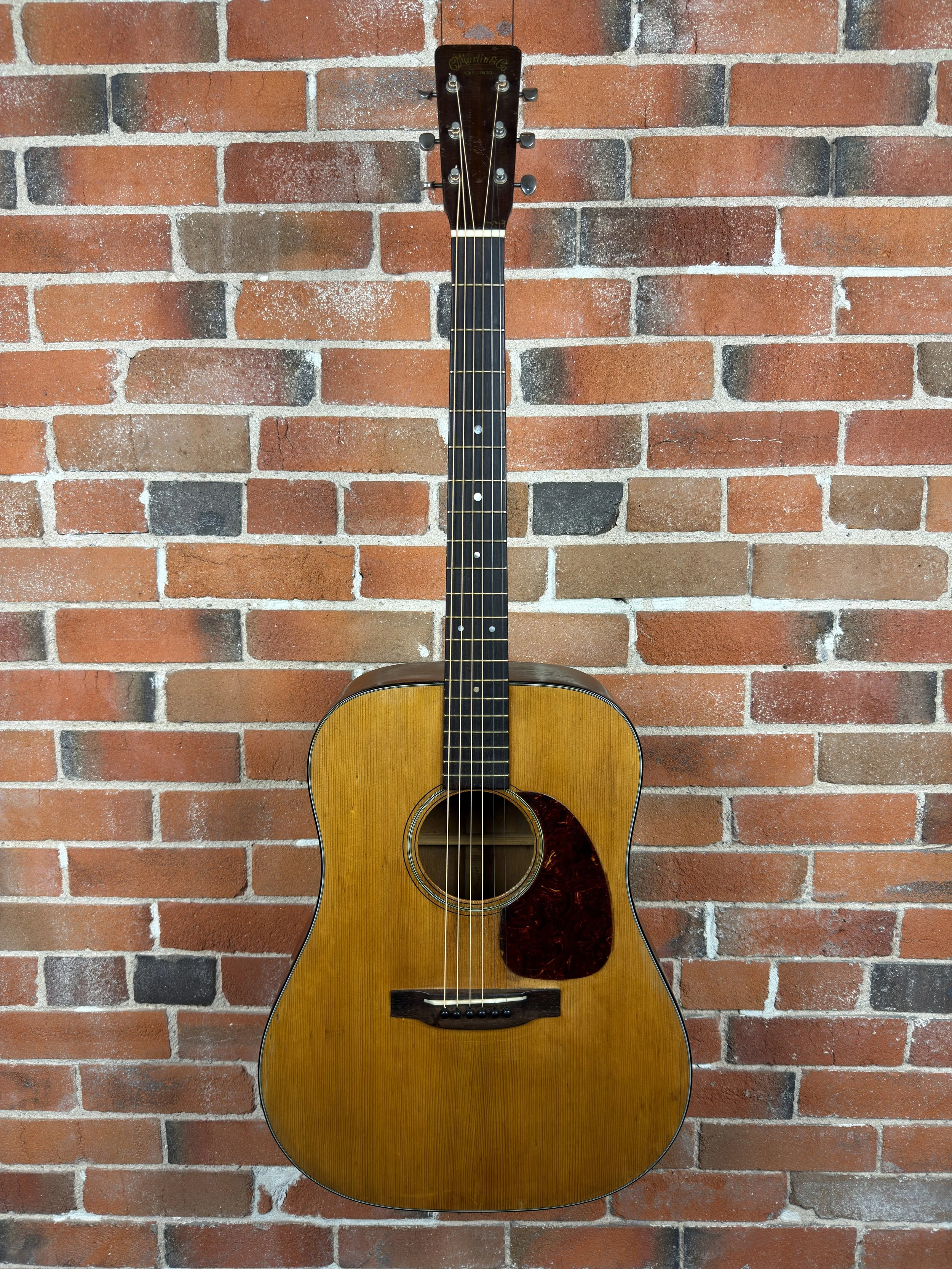
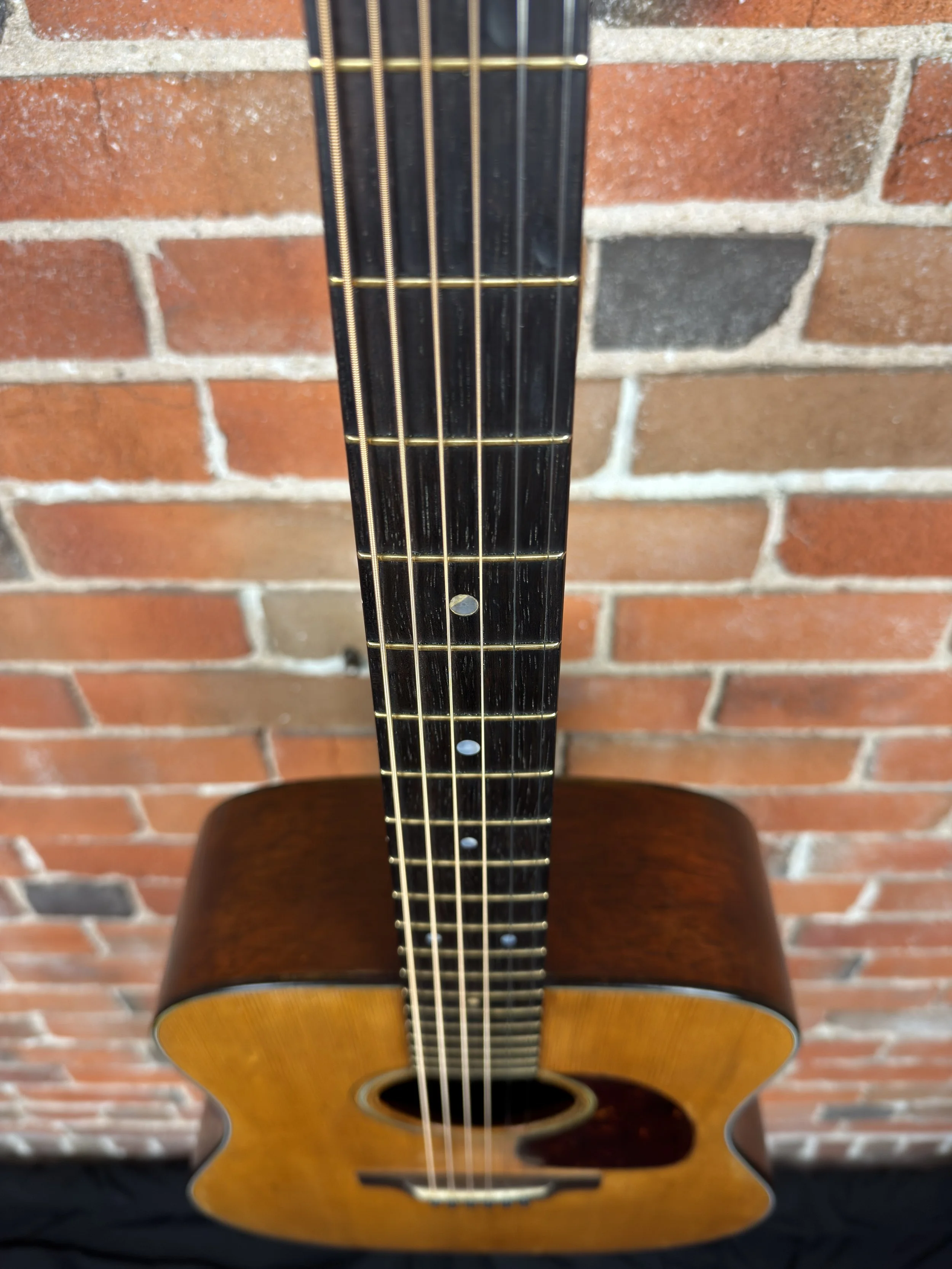
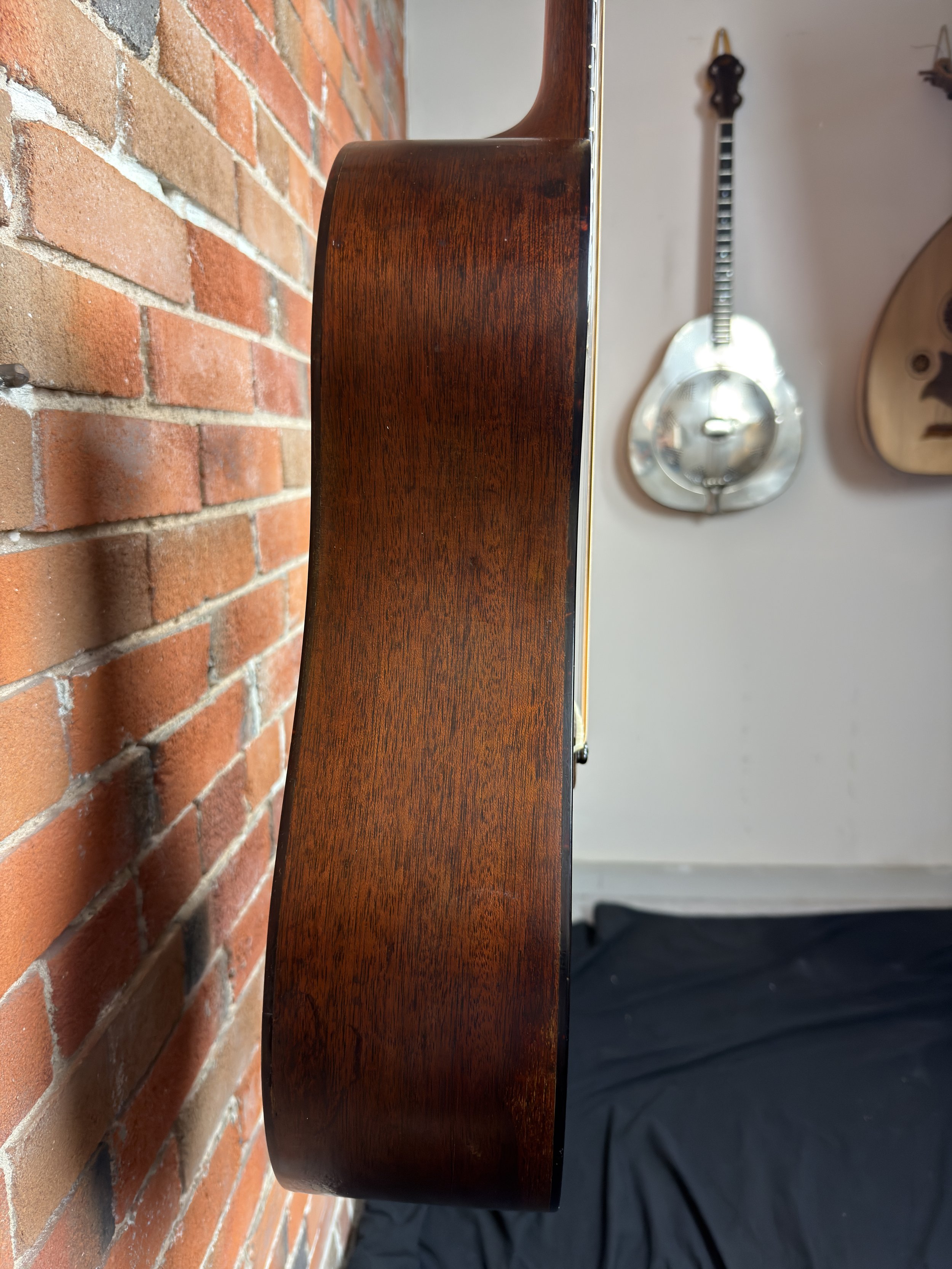
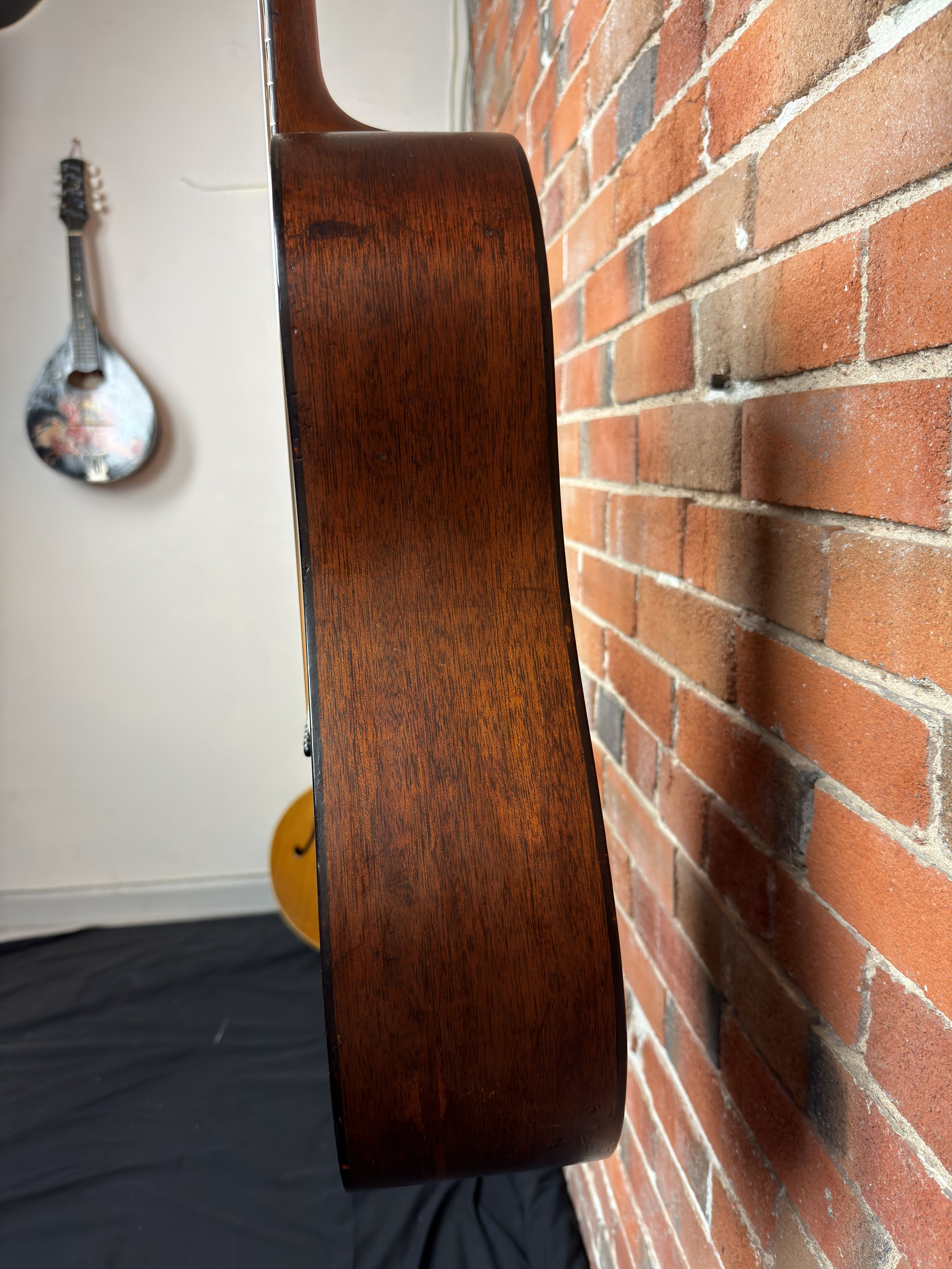
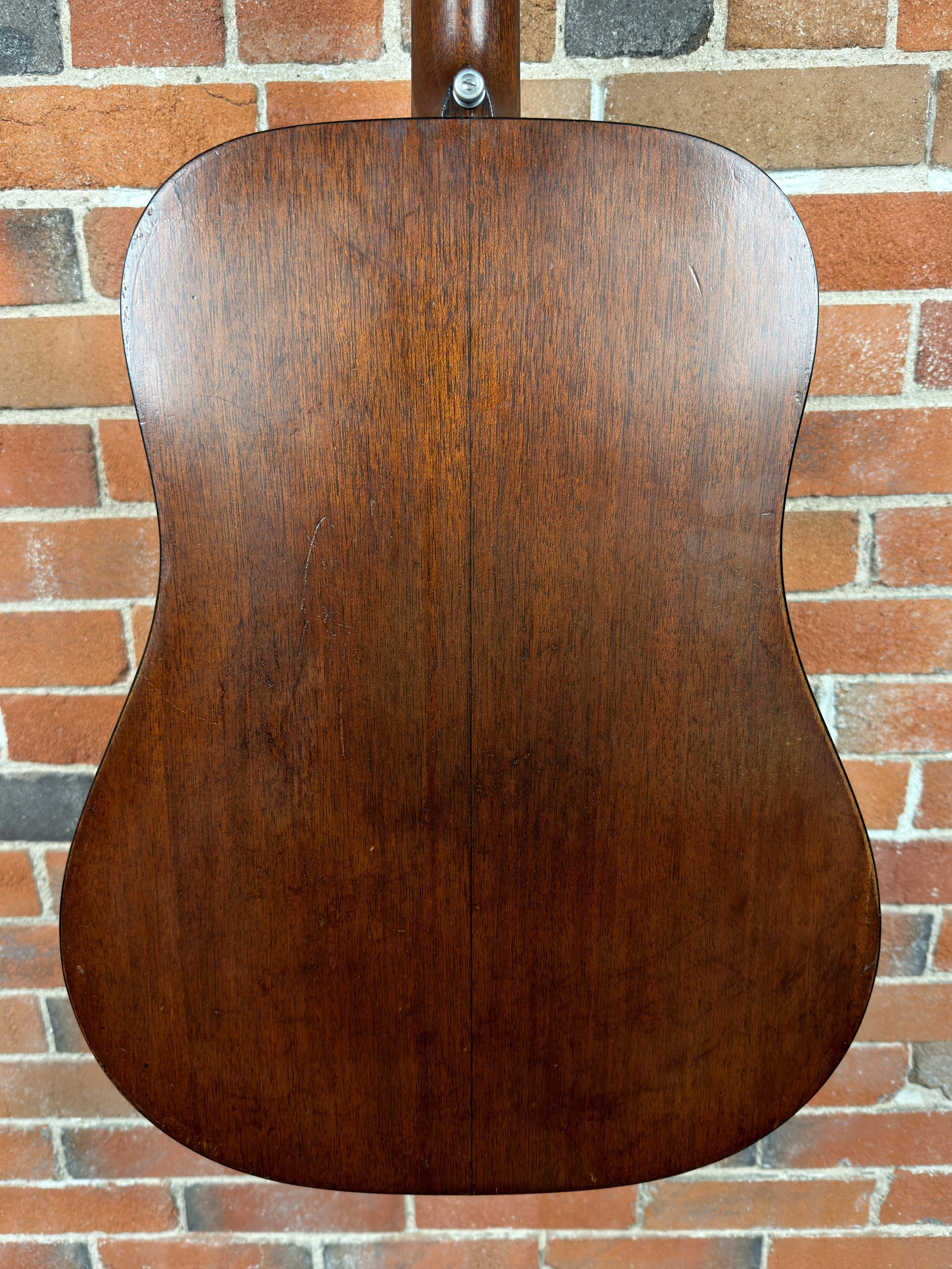
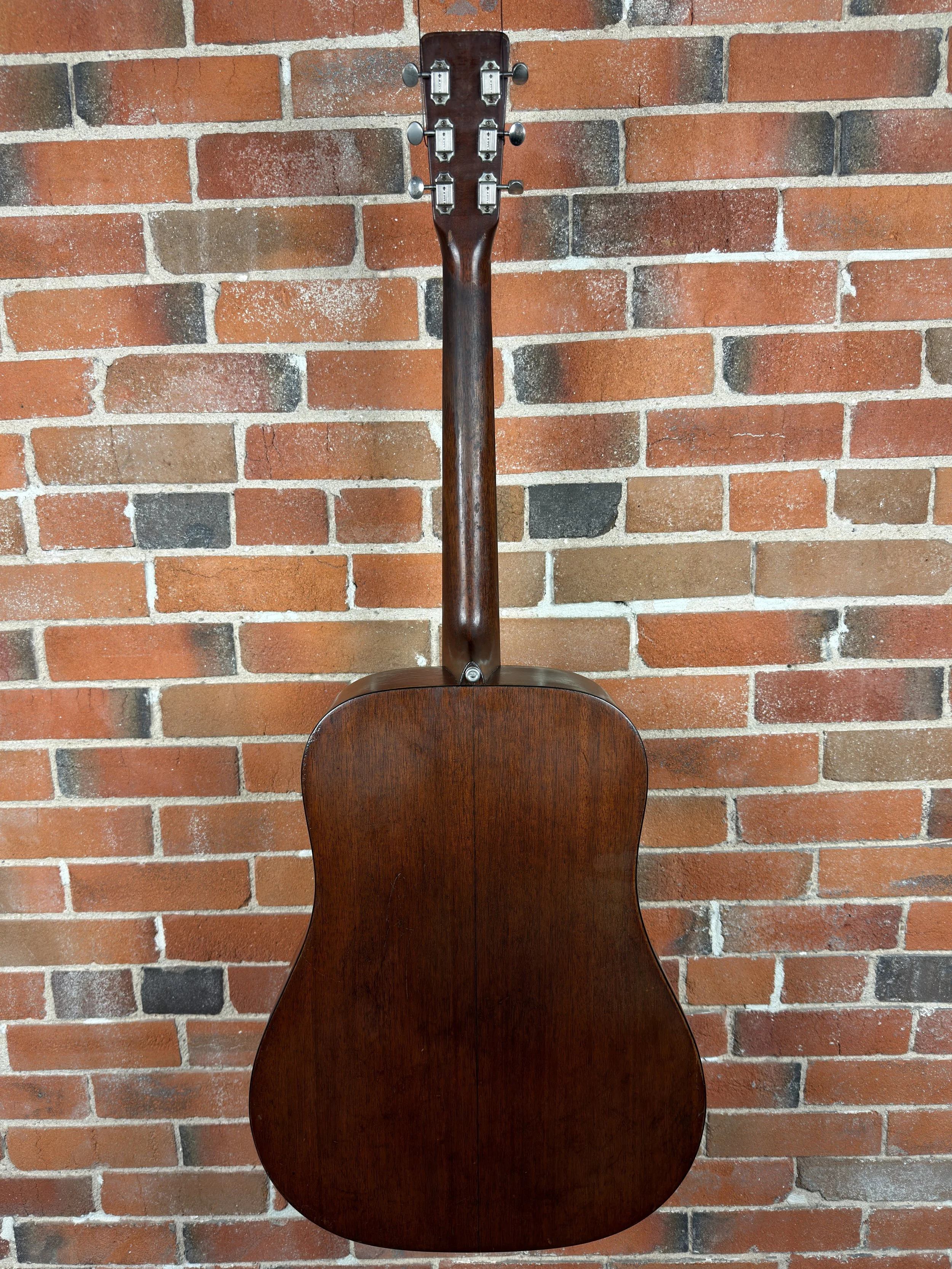
This example, from 1953, features what we believe to be one of those mystery tops. A nice and round, woody sounding example, this guitar has had, at some point in its life, a full body refinish, most likely done in a French polish style varnish or light lacquer, and it gives the guitar a much older look than its 50’s compatriots.
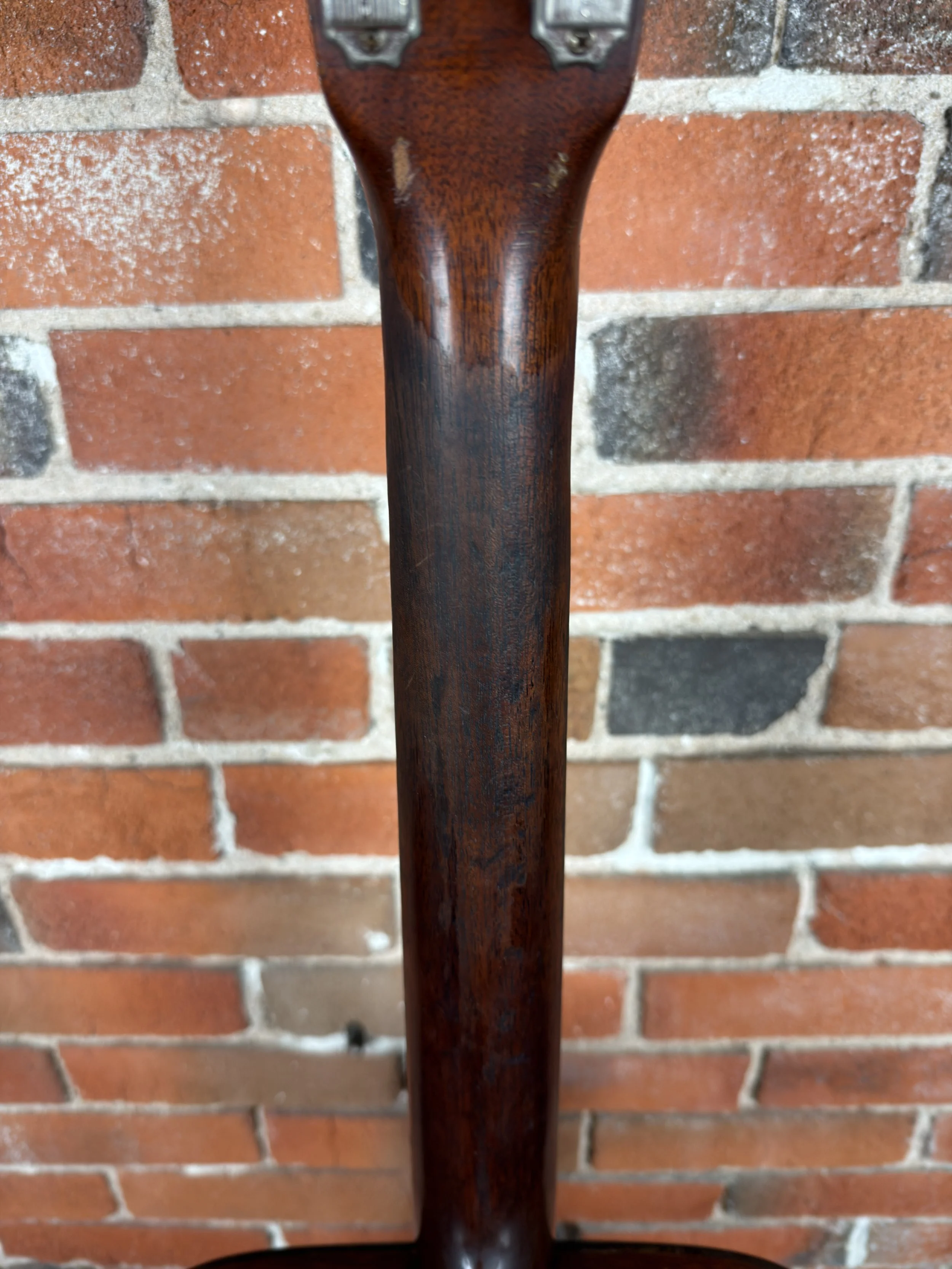
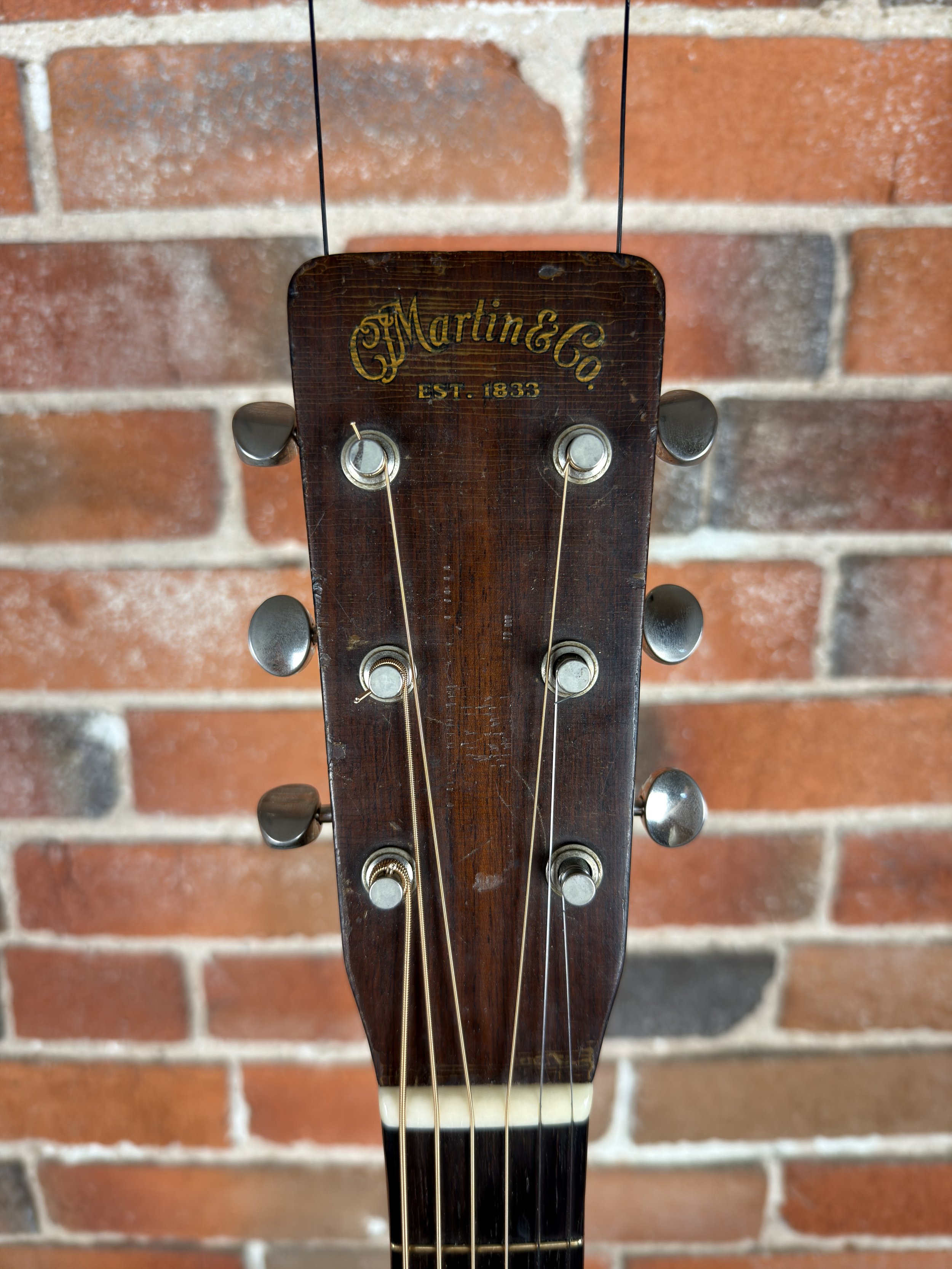
This guitar’s neck, interestingly, is much smaller than the usual semi-V profile of the early 50’s, which, paired with the normal 1 11/16th nut for this time period, makes for a surprisingly modern playing experience, more akin to a Taylor than a modern Martin. Super speedy! The finish on the neck is thoroughly warn, making for a super comfortable in-hand feel.
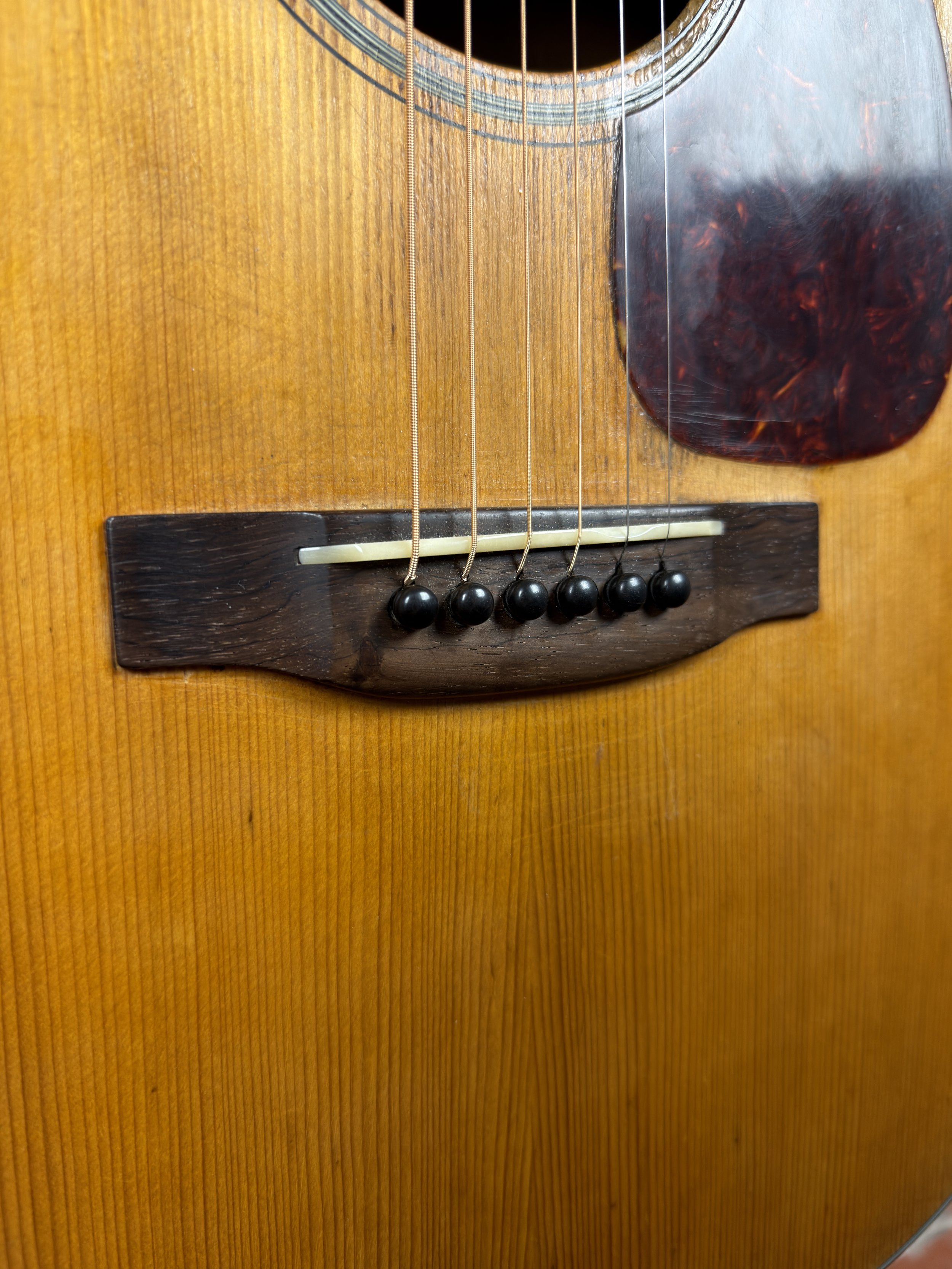
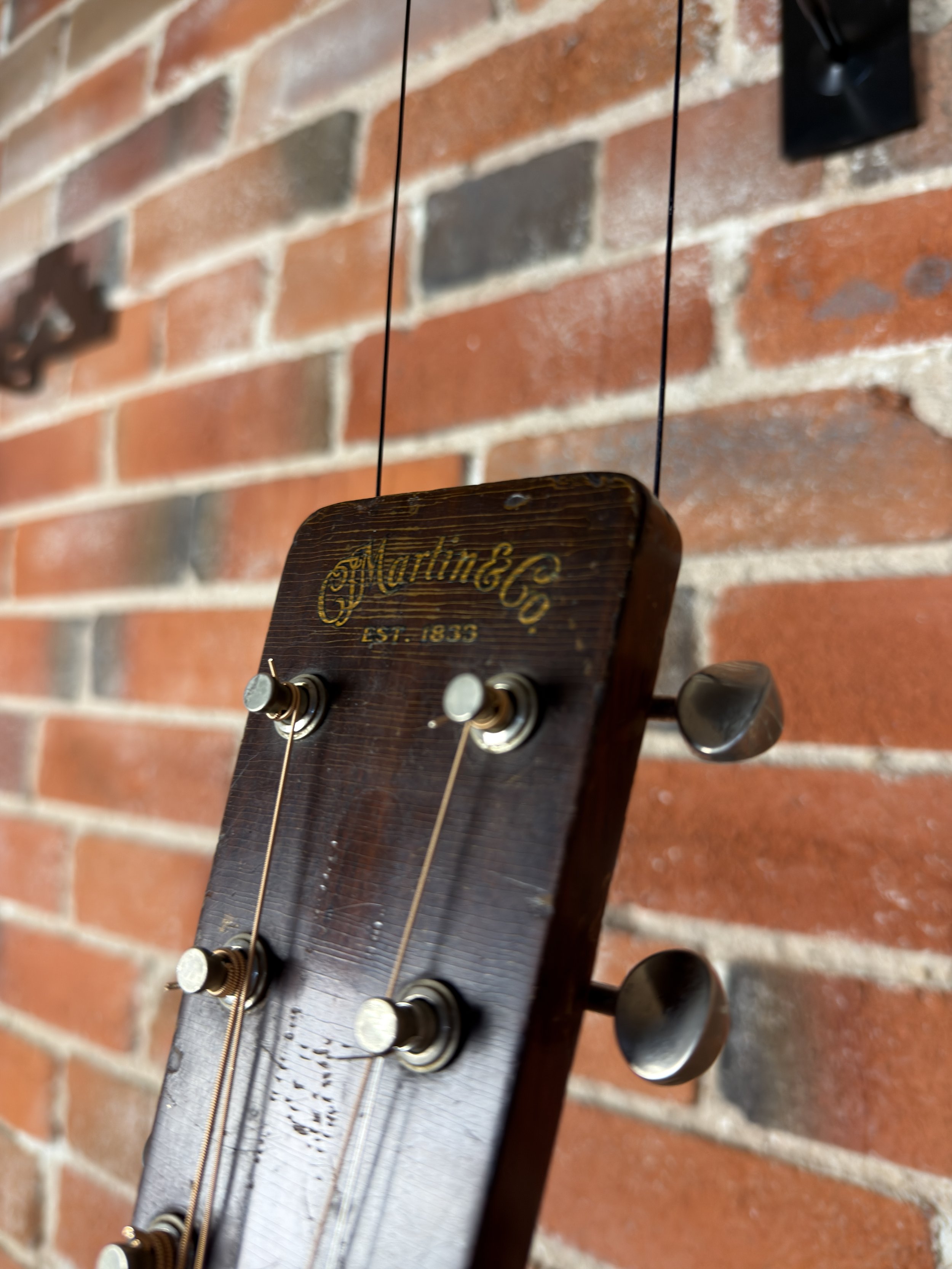
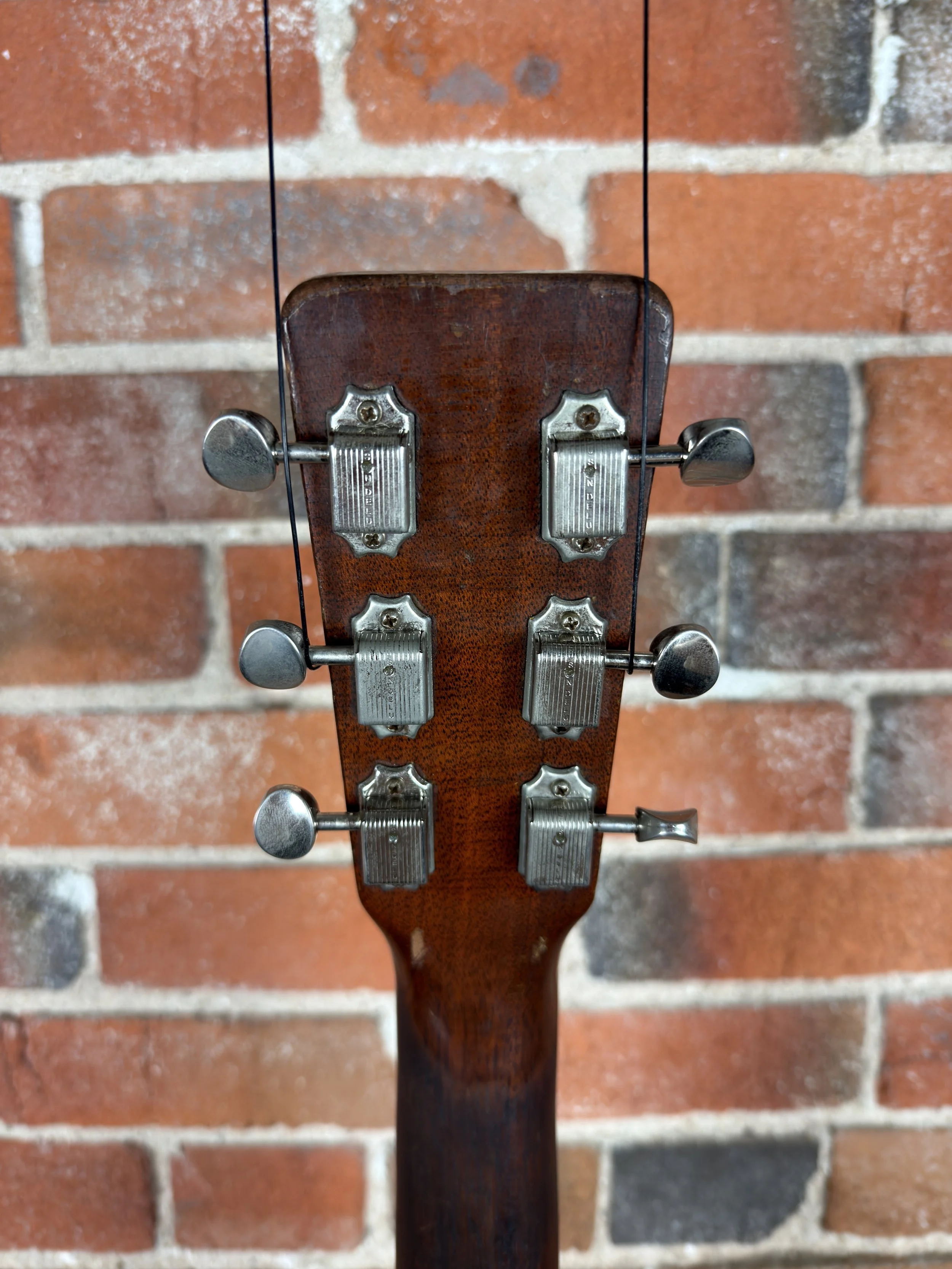
The tuners on this old gal might be the originals, as they’re single line Klusons that look vintage enough, but most likely are period replacements, given everything else this guitar has had done. The bridge is possibly the original, and definitely has been shaved at some point. The guitar has also had a neck reset.
Set up great, with one crack repaired on the back. Has previously been refrettted with gold EVO frets.
Comes with a non-original hard shell case.